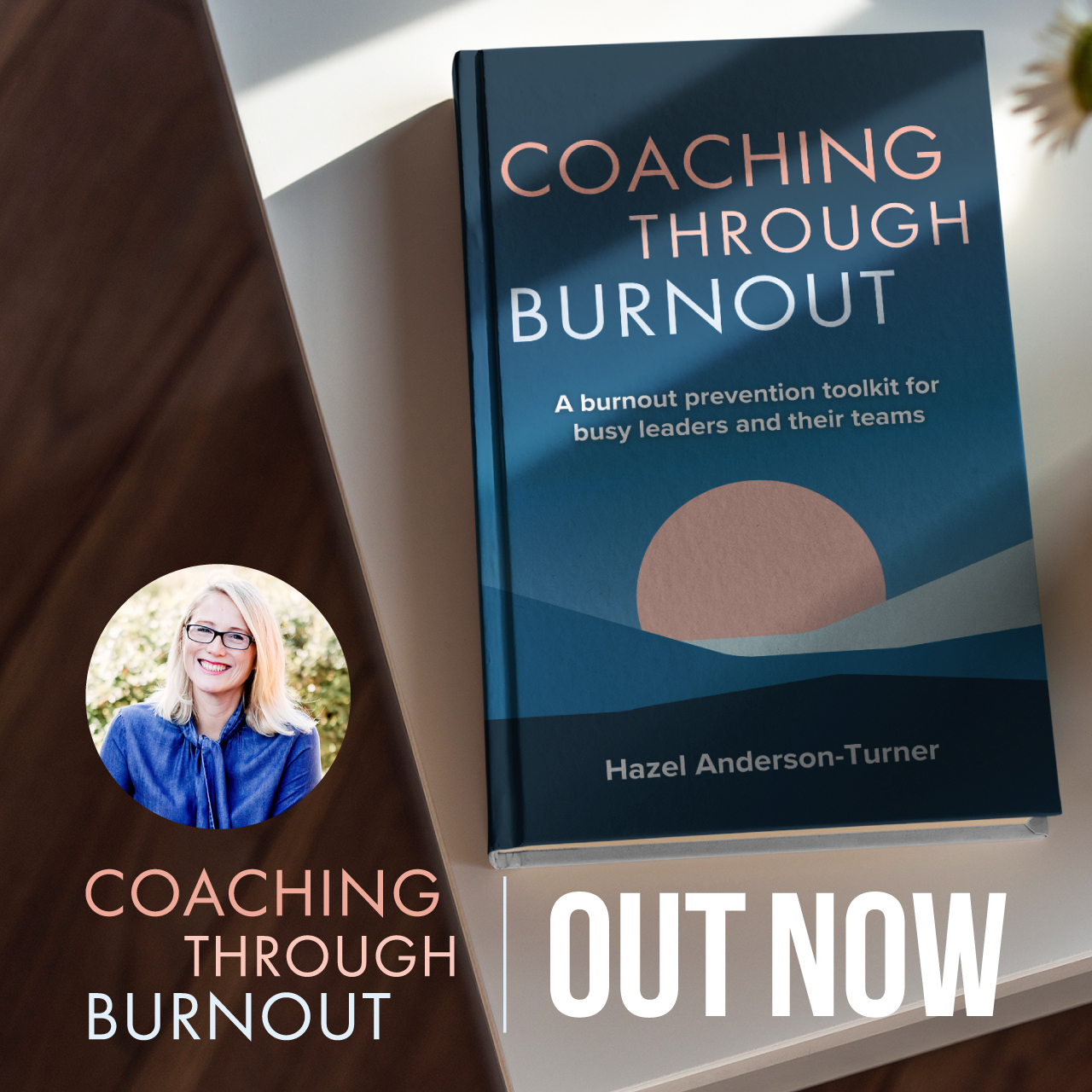
Below I’ve pulled out some sections of my book, Coaching Through Burnout, to share what Psychological Flexibility is, and how it might help you to increase your confidence in how you respond to life’s challenges.
In my coaching I use Acceptance & Commitment Therapy (ACT) in a coaching context to support individuals to become more psychologically flexible, which I describe as being able to respond flexibly and consciously to whatever life inevitably throws at us, in a way that reflects the person we really want to be. Psychological flexibility is officially defined, by one of ACT’s founders, Steven Hayes, as “The ability to feel and think with openness, to attend voluntarily to your experience of the present moment, and to move your life in directions that are important to you, building habits that allow you to live life in accordance with your values and aspirations.” (Hayes, 2019).
Yesterday I experienced a moment of psychological flexibility first-hand. I returned to a car park to find the thing we all dread, that red and white ticket stuck on my windscreen. I had proof from the parking app that I had paid and yet here was a ticket. Typical.
As much as this was an unwelcome surprise, a more welcome one was that I didn’t react in the same way I know I have previously. I didn’t get frustrated or caught up with how unfair it was, I didn’t start panicking about whether I would have to pay it. I calmly took some screenshots of the proof of payment, popped the notice in my bag and made a mental note to email them later.
When we are psychologically flexible, we are able to consciously respond in a way that reflects what’s important to us, rather than instinctively respond in a way which isn’t helpful to us in the long term. It is through this flexibility that we can also see the choices that we have that enable us to create a rich, full and meaningful life.
We can increase our psychological flexibility by integrating the ideas and practices of ACT into our lives. ACT is a behavioural therapy like Cognitive Behavioural Therapy (CBT) and is derived from a theory of human language and cognition called Relational Frame Theory (RFT). Luckily, we don’t need to get geeky and into the depths of ACT’s theoretical background to use it for our purposes.
ACT supports the development of psychological flexibility by (among many other things) increasing our ability to:
- Understand what is most important to us.
- Be willing to take action in the service of what’s most important to us, even when it’s uncomfortable.
- Be present so that we create the space to make better choices.
- Sit with uncomfortable emotions.
- Notice that we do not need to believe or act on every thought we have.
- Improve our relationship with unhelpful thoughts.
Six Powerful Messages from ACT that can help you to increase your psychological flexibility
1. You are not broken
One of my biggest takeaways from ACT has been that so many of the unhelpful things we do are part and parcel of being a human being. Whether it’s about being self-critical, being anxious in situations where we could feel rejected, or experiencing strong emotions when something we care about is threatened. This normalisation of the human experience is so important. We are not broken; we might just have some things that aren’t working for us in our current context. When we internalise this normalisation of being human, we open ourselves to greater self-compassion rather than trying to continually ‘fix’ ourselves.
2. You are not your thoughts
Our thoughts are our near constant companion. Until I discovered ACT, I hadn’t ever thought about the relationship I had with my thoughts. I guess, on reflection, I thought they were ‘me’. My thoughts told me what to remember, what to worry about, what to do. I don’t remember ever questioning the intention or the validity of my thoughts, they just were what they were. ACT showed me that my relationship with my thoughts wasn’t as simple as I might have assumed. Our mind is a meaning-making machine on a mission to make sense of our lived experienced.
3. You can’t just remove thoughts you don’t like
Imagine that I’ve sent you a chocolate cake in the post. You are very excited because chocolate cake is your absolute favourite. When the box arrives, you rip it open, your mouth salivating at the thought of it but what you see in front of you stops you in your tracks, your mouth dries up and a look of disgust takes over your face and you push the cake away. Turns out that I thought it would be really funny to ask the cake shop to pipe ‘find the toenail’ on the top of the icing. Even though you know that this is one of my terrible jokes, you feel unable to eat the cake. You just can’t get the thought that there might be a toenail in it out of your mind. In actual fact, the more you try not to think about it, the more the toenail keeps popping back into your mind. We can’t selectively remove the thoughts we don’t want and often when we try, we embed the thought even deeper in our mind. It’s as if our attention gives it power.
4. It is not the thought itself that is the issue, it’s our relationship with the thought that trips us up
In my teenage years, I used to sneak into the spare room and snuffle away a piece of arctic roll while my parents watched TV in the room below. I realise that I’ve never asked them why we had a chest freezer in our spare bedroom, maybe it’s best not to. Since the ‘arctic roll years,’ I have always struggled with my weight and with the belief that I am fat. When I really connect with that thought, when I say, “I am fat” over and over again, what do you think I want to do? Do you think I want to go for a run or eat some lettuce? No. I want to sit on the sofa watching Love Is Blind while eating a massive bag of crisps. This statement, “I am fat” is absolute, there is not a maybe about it, no doubt about whether it is true, it is presented as a fact, as a statement about who I am. When we take our thoughts as facts and really connect with them, feeling their truth in our core, something that we call ‘fusing’ in ACT, we often do not feel motivated to do something that is helpful for us in the long term.
The problem is not the thought itself; the challenge comes from the ‘fusion.’ When you unpick any of our ‘I am’ thoughts you start to see that they don’t even make sense, and yet they can have a profound impact on our lives. What does ‘I am fat’ even mean? Yes, my body has fat in it but that’s not what the statement is about. Our ‘I am’ statements are about subjective judgements. “I am not good enough,” “I am stupid,” “I am a failure.” They are fixed stories that we’ve carried around for years that challenge us because of the relationship we have with them.
5. Getting comfortable with discomfort
Humans don’t really like discomfort, particularly when it comes to emotions. Think about the enduring messages that you received from your childhood about emotions. Emotions weren’t talked about in my family growing up. My parents worked incredibly hard and there was an unspoken rule that you didn’t show or talk about emotions because not only did it show weakness, but because it was selfish to draw attention to yourself when everyone was having a tough time. It took me a long time to even be able to recognise and name emotions let alone be able to work out what they are about. This is because I would quickly bury an emotion and then it would pop out at a future time, usually in reaction to something that objectively seemed really small. Since my emotional reactions were so detached from a ‘triggering’ event, I became quite scared of my emotions because I couldn’t understand them or predict when they were going to ‘pop out.’
One of the things I have learnt that has helped me most with my emotions is their connection with values. I am angry because something I care about has been threatened or an internal principle I hold has been crossed. I am sad because I’ve lost something that matters or I’m feeling deep empathy and connection to another being who is suffering. I am scared because I have something to lose that I care about.
I no longer talk about ‘negative’ or ‘bad’ emotions and encourage those I work with to do the same. ALL our emotions are fantastic information about what matters to us. The more comfortable we get with the discomfort we naturally feel when we experience uncomfortable emotions, the more likely we are to be able to move through them in a way that enables us to take our emotional data and respond in a way that reflects our values.
6. Work out what is most important and build your life around this
Life can feel a bit like supermarket sweep. We’ve got a limited amount of time, and we need to run around grabbing the right partner, the house, the good job, the ‘two point four’ beautifully behaved children, the holidays that we can post photos of on Instagram, and so on. We probably aren’t sure what we really want out of life at the start, so we grab all the things that everyone else is grabbing, assuming that everyone else must have a better idea of what life is supposed to be about than we do. Exploring and clarifying what matters most, and what your own personal version of success is, can help you to start taking small steps towards a life you really want to live.
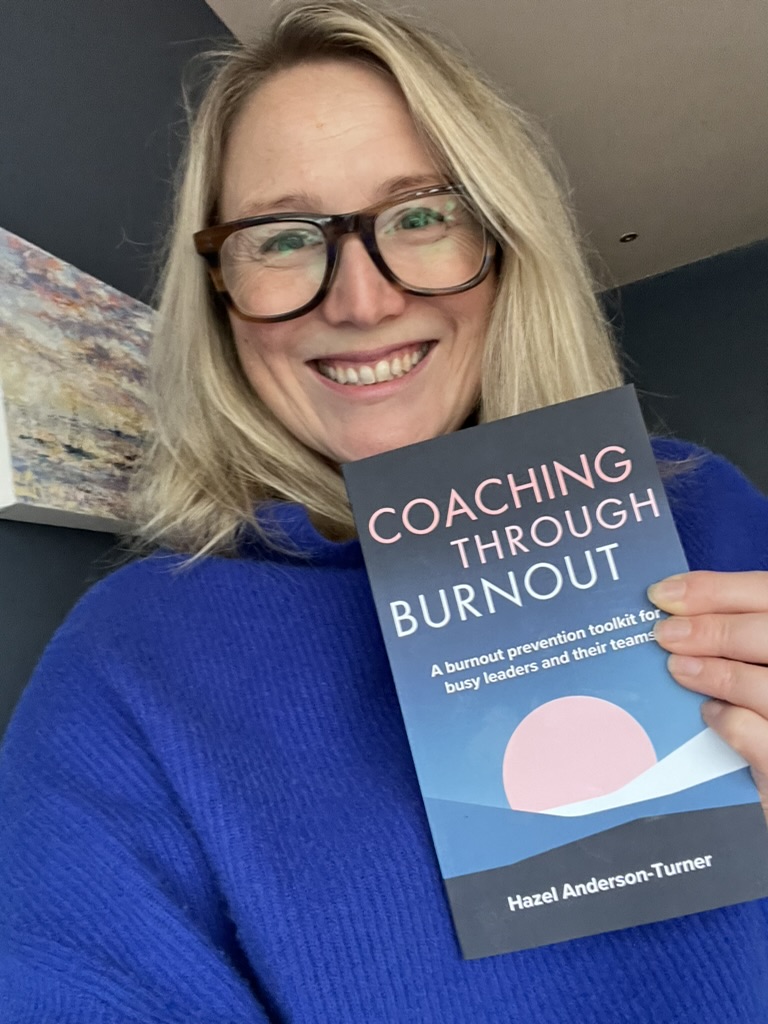
If you found this introduction interesting you might like my book, Coaching Through Burnout, or maybe you’d like to explore 1:1 coaching. If that’s the case, drop me a message and we can explore working together.