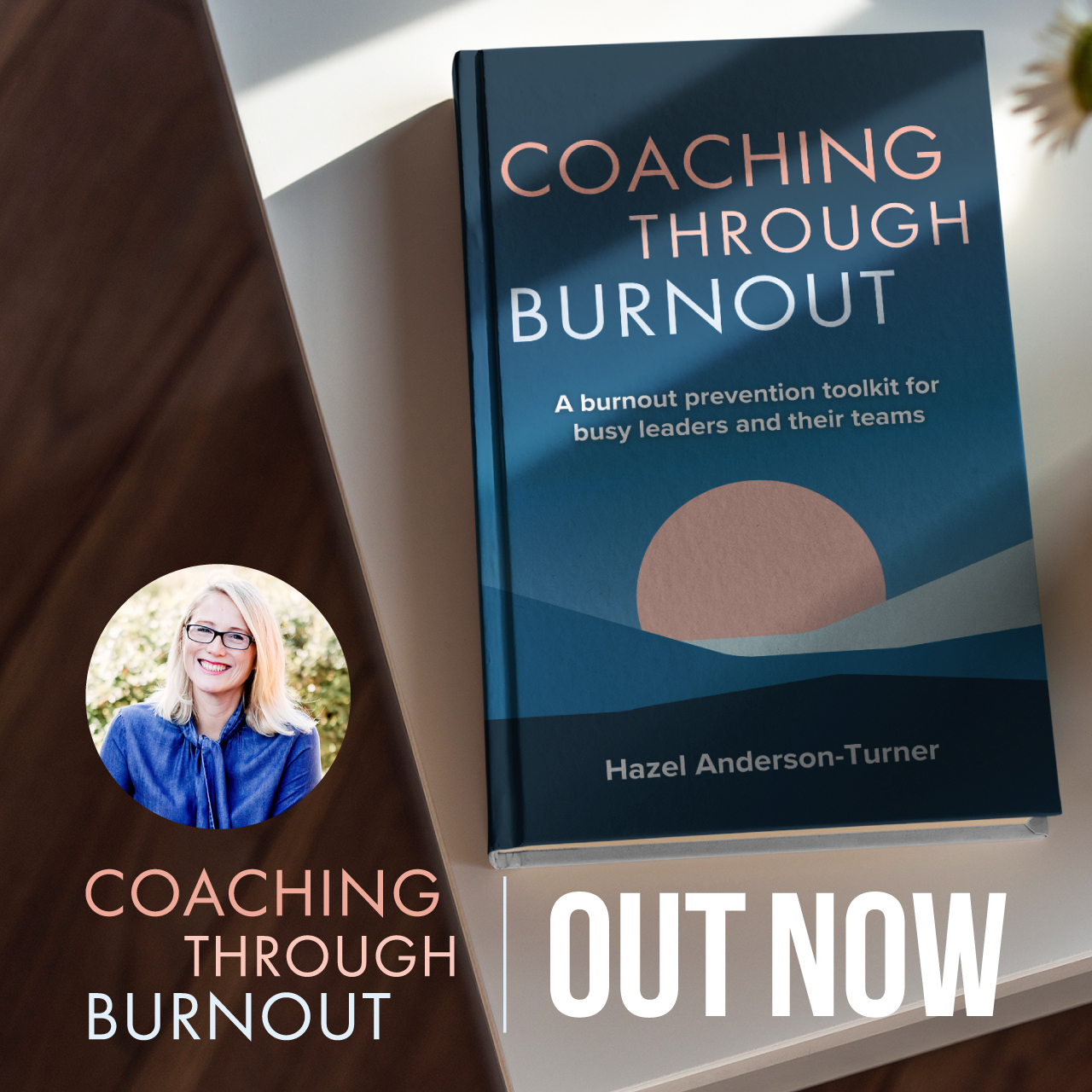
To mark a year since my book, Coaching Through Burnout, was published, I’ve written an extended blog about some of the thornier areas of burnout that I either chose not to include in the book, with the aim of keeping things simple, or that I have developed more consciousness and understanding of in the last year. I step into the topics of systemic power, of gender, and of the reality of trying to live compassionately in line with our values. Stepping into these trickier, more nuanced places feels important in the context of our current global environment and I hope highlighting them brings new light to the aspects of burnout that make it so pervasive.
Burnout and Power
Power distance is a concept developed by cultural psychologist Geert Hofstede to describe the extent to which inequality in power is accepted within organisations and societies (Hofstede, 1980; Hofstede et al., 2010). In high power-distance systems, authority is rarely questioned, decision-making is centralised, and employees are expected to comply rather than challenge. While the UK is often described as a moderate power-distance country, research shows that many UK workplaces, particularly in healthcare, education, law, finance, and the civil service, operate with strongly hierarchical norms.

Image credit: Elise Coates via Unsplash
Burnout in these contexts is not merely a by‑product of hard work, it is the result of responsibility without authority. People are held accountable for outcomes while being denied meaningful influence over decisions that shape their workload, priorities, or values. Over time, this mismatch leads to emotional exhaustion, cynicism, and a reduced sense of efficacy.
Crucially, burnout does not only deplete our energy, it reduces our capacity to challenge power.
Exhausted individuals are less likely to question authority, push back against unreasonable demands, or engage in collective action. Staff are constantly busy, running on ‘survival autopilot’, head down, just trying to make it through another day. This, understandably, leads to a workforce much more likely to comply than to question, not because they agree with the system, but because they are too depleted to resist it. There is a part of me that thinks that the people who have the most power in our global economy know this, and it is a part of their strategy to maintain power, even in the face of overriding evidence that change is needed.
Burnout and Gender
Gender is a critical, and often overlooked, dimension of burnout. Extensive UK and international evidence shows that women continue to carry a disproportionate share of unpaid caregiving and domestic labour alongside paid work (ONS, 2016; OECD, 2021). This includes childcare, elder care, household management, and emotional labour. Sociologist Arlie Hochschild described this as the ‘second shift’, highlighting how paid work is followed by unpaid care work that remains largely invisible within organisational design (Hochschild, 1989).
For many working mothers and carers, this means entering the workplace already carrying significant cognitive and emotional load. When this reality meets rigid, high power-distance organisational norms (limited flexibility, long-hours cultures, and unchallengeable expectations) the risk of burnout escalates sharply. UK research shows that women are significantly more likely than men to reduce working hours, stagnate in progression, or exit the labour market due to caring responsibilities, particularly between the ages of 35 and 55 (TUC, 2022; Carers UK, 2023). What a loss of skill and expertise this is for our economy, let alone the impact it has on the women who feel they have no choice but to step back.
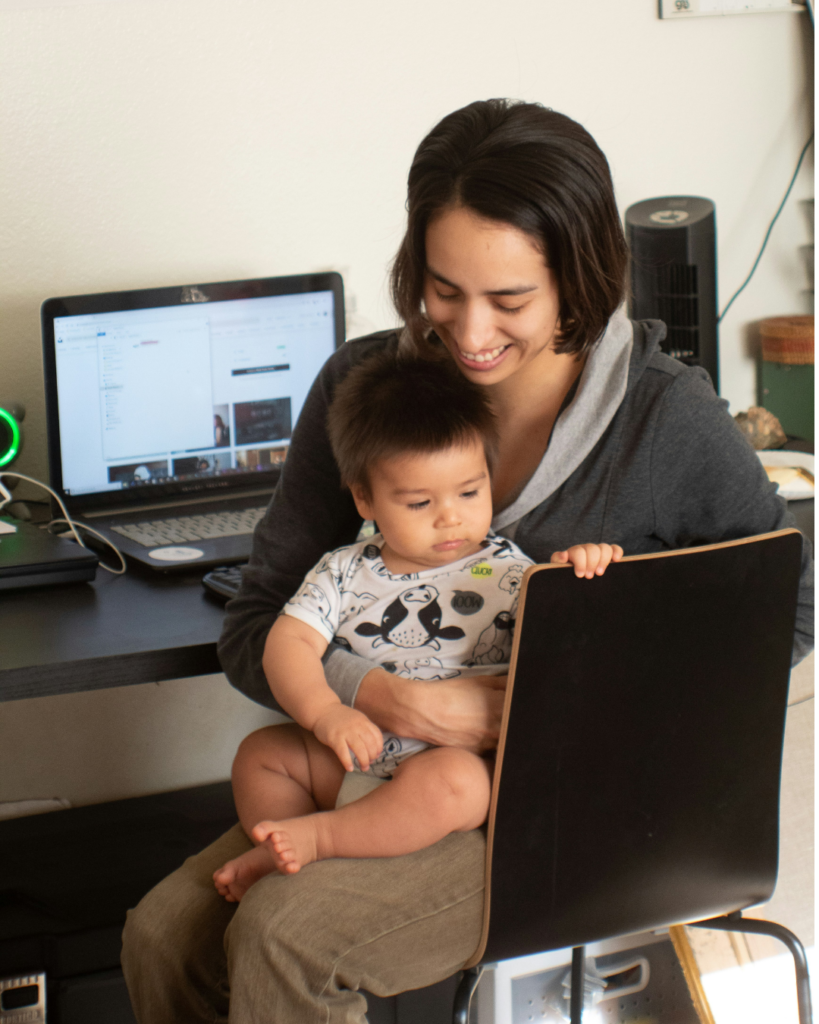
Image credit: Brian Wangenheim via Unslpash
When gendered caregiving responsibilities are embedded within high power‑distance systems, the risk of burnout intensifies. These systems are typically designed around an ideal worker who has no caregiving responsibilities, unlimited availability, and the ability to prioritise work above all else. Flexibility is treated as an exception rather than a right, and accommodations are framed as personal favors rather than structural necessities. I see it so often in my work that women, particularly working mothers and carers, absorb the strain created by these assumptions, often at the expense of their own wellbeing.
Burnout in caregiving contexts has a distinctive psychological profile. It is more likely to manifest as guilt, self‑blame and withdrawal. High power‑distance cultures often reinforce this pattern through moral narratives that celebrate ‘pushing through’ and stigmatise complaining. Struggle is seen as an individual issue, and systemic problems are reframed as personal failings.
From the perspective of those in power, whether intentionally or not, this dynamic is stabilising for the system.
Burnt out caregivers cannot afford to challenge authority or risk exclusion from paid work because too many others depend on them.
At the same time, organisations are insulated from accountability because caregiving strain is framed as a private issue rather than a structural one.
Understanding burnout through the lens of both power and gender forces a reframe.
Burnout is not simply a health issue or a personal coping problem. It is a gendered and political outcome of systems that rely on unequal power and invisible care labor to function smoothly.
High power‑distance societies do not need to actively suppress dissent when they can rely on exhaustion to do the work for them. The persistence of burnout, particularly among women with caregiving responsibilities, is not a failure of individuals to cope. It is a predictable consequence of systems designed to remain unchallenged.
Burnout and Values
One of the symptoms of burnout is cynicism and detachment, which I believe is fundamentally about a mental ‘move’ to protect ourselves. I work with a lot of people who care deeply about their work, whose work is more than a pay cheque, it is their purpose and a core part of their identity. If we have reached the point where our deep caring is hurting us, then it makes sense that we might try and emotionally distance ourselves from our caring.
We might also be experiencing discomfort from the gap that exists between what our values would like us to deliver and what we are able to practically deliver. If this happens, we can find ourselves feeling frustrated, angry or helpless.
If we are deeply driven to make a difference and constantly face barriers to being able to do the things we feel would make that difference, it can be soul destroying.
When a client finds themselves in this place, I work with them to both develop ways to process the difficult emotions that show that they care AND find small ways to continue to live their values even under the toughest circumstances.
We can also be challenged if we have signed up for organisational values but don’t perceive them being lived by those who have the most power and influence in our organisations (I’m definitely not looking at you Tim Cook…). This can leave us with a sense of “what is the point of trying to live your values when those at the very top aren’t doing what they are asking everyone else to do”.
Burnout and Compassion
I strongly believe that we can reduce the likelihood of burnout occurring if we can increase the amount of compassion within our organisations and systems. No, I’m not going to start banging on about loving each other more, compassion is so much more than this. Compassion is about noticing suffering (in ourselves and others) and taking wise and courageous action. Paul Gilbert, the creator of Compassion Focused Therapy (CFT) gives the example of fire fighters when he describes compassionate acts – they respond to an incident and bravely step into danger in order to save another person’s life. Compassion, from this perspective could be calling a team meeting to suggest a change to a practice that is causing unnecessary stress, observing that we are struggling emotionally and calling a friend to chat it through, noticing that a colleague is a bit snappier than normal asking them whether they are ok before going on the defensive.
Our ability to be compassionate to others is strengthened when we have developed our ability to be compassionate to ourselves.
The challenging thing about self-compassion is that when we are in survival mode, we can lose connection, not just with what truly matters to us but also with the discomfort we experience within ourselves.
We quickly put our emotions in a box and power through or distract ourselves rather than feel what we are feeling. We do this often because it is the way we are conditioned to be, no, it’s more than that, we have internalised the idea that it is a sign of strength, to ignore how we are feeling and just carry on.
In our society, pausing and making space to acknowledge what we are feeling actually feels like an act of rebellion against the status-quo. Working out what action is the wisest and most courageous next step feels counter-intuitive when we are struggling to find the energy to get through the week but, I would argue, that it is the only real way that we will collectively find a way out of this place.

Image credit: Giulia Bertelli via Unsplash
Final thoughts and reflective questions
I have always talked about burnout being about the context and our relationship with our context, rather than it being an individual issue. This is helpful in the sense that it means that we are not all ‘broken’ in some way. However, it makes the long-term solution to burnout incredibly complex and influenced by invisible forces that feel out of our reach.
In order to make any change, we will need to talk more about it and find areas that we can combine our strength on. It reminds me of one of my favourite quotes:
“Never doubt that a small group of thoughtful, committed citizens can change the world; indeed, it’s the only thing that ever has”
Margaret Mead
But before this, we need to start with our relationship with ourselves – to find a way to really hear and acknowledge what is troubling us, supporting us to connect with our inner sense of wisdom and courage and live our values. Here are some self-coaching questions to help you get started:
- What five words sum up how you’re feeling right now? (Embrace the dichotomies – it’s absolutely possible to feel sad and happy, angry and peaceful…)
- What do any of your uncomfortable emotions say about what really matters to you?
- What would the you of twenty years in the future say to you about your life, if they had the opportunity?
- If you could join a movement to change one small thing about the world we live in, what would that movement be trying to change?
- Who is in your ‘small group of thoughtful, committed citizens’? (You don’t need to start changing the world, just being in conversation is soul-restoring).