I first read William’s Bridge’s book Transitions: Making sense of life’s changes ten years ago (2019) when I was training as a coach. I found it such a refreshing and very human alternative to the more well-known approaches to change such as the change curve. It’s a book that I’ve continued to recommend to clients who are going through periods change but if I’m honest, I had forgotten how much there was for me to still learn from William’s work until, on a whim, I grabbed the book from my bookcase as I was leaving for a week in our campervan in Cornwall this summer.
As I let myself get lost in the descriptions of endings, neutral zones and beginnings, I realised how much I needed to integrate William’s teachings into my own life and how important it felt to share his insights with others. Williams describes transitions as:
“The difficult process of letting go of an old situation, of suffering the confusing nowhere of inbetweeness, and of launching forth again in a new situation.”
Our life is a series of overlapping transitions and how we approach these transitions can have a profound impact on how difficult life feels. Coaching clients often come to me in that confusing ‘inbetweenness’ feeling lost, stuck or energetically and emotionally low. Williams’ work has helped me to support my clients to start with exploring what has ended. He is very clear, even though we might want to leave the past behind and just get on with moving forward, not giving space to the endings in our life can hold us back from truly moving forward.
“transition needs to start with endings”
I had planned to write a blog summarising the transition model, however, there is so much important wisdom to share that I am going to split it between three blogs, one about endings, one on the ‘neutral zone’ and one on new beginnings.
Starting with endings
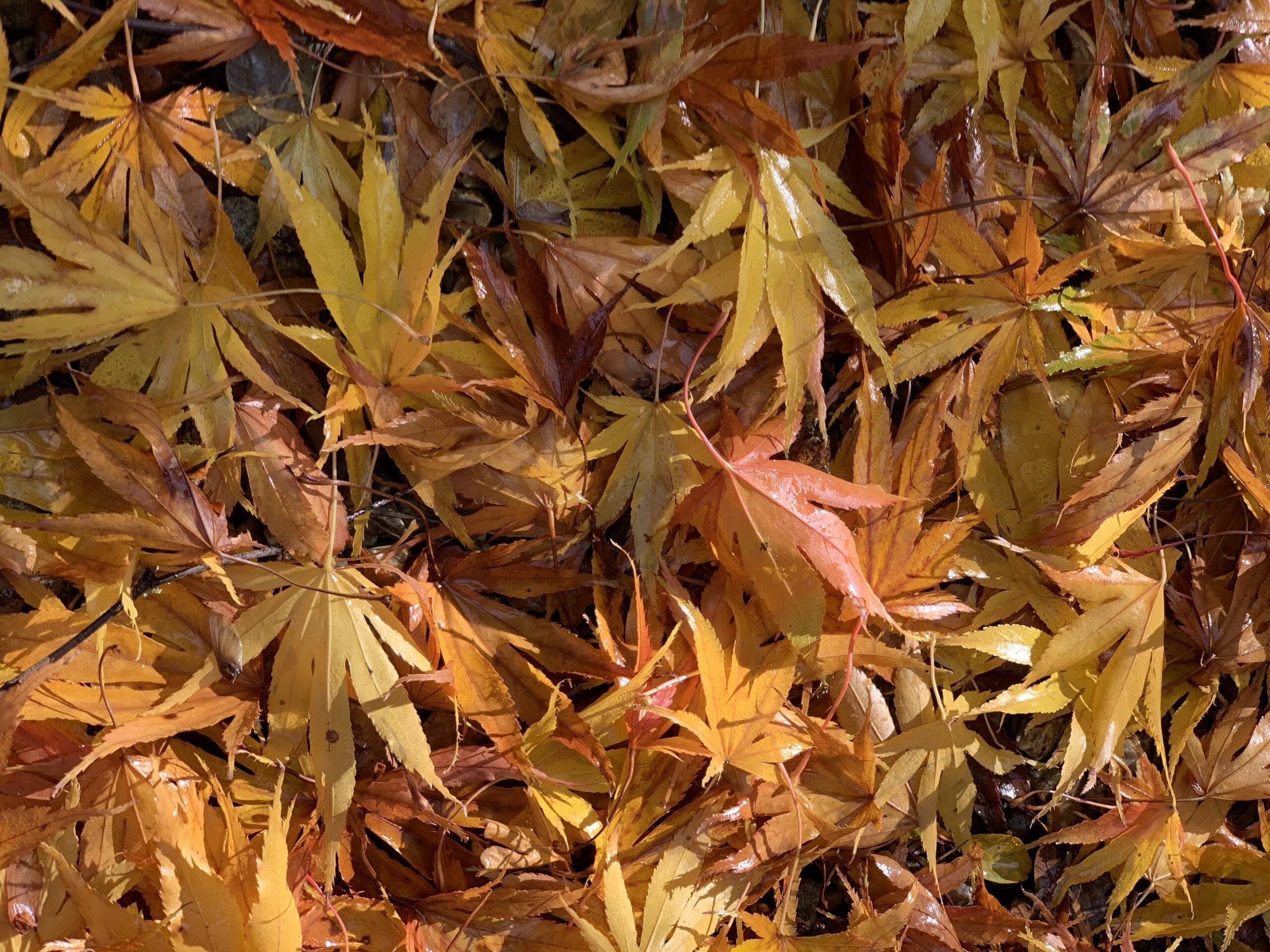
Looking out of my window at a large oak tree whose colours are gently changing from green to orange, it feels as this if the seasonal change is mirroring my writing. Autumn is a necessary time of endings, and a letting go of a period of long sunny days, where plants were growing and flowering and crops were abundant. Nature does it so effortlessly and it’s interesting that even though we know the inevitability of it, we can still resist the transition within ourselves – I envy those people who love autumn and winter and are ready with their candles, blankets and pumpkin spiced lattes. I am not one of them, I am a spring/summer kind of person. It frustrates me but every year I do genuinely morn the end of summer and resist getting out my chunky jumpers for as long as possible.
Noticing how we typically feel about and respond to endings is a really useful place to start understanding the impact they have on us and what we might need to do differently to support us through transition. We will undoubtably have developed a go-style. Maybe, when you reflect back, your endings tend to be abrupt, with you denying the impact of the change. Or maybe you notice that endings seem to creep in slowly and it takes you a while to notice they are happening. William suggests reflecting on your behaviour at social gatherings – do you leave early, or do you stay way beyond the time you planned to leave? He says:
“The person who leaves early and the one who stays late are both avoiding endings and the discomfort of facing a break in the continuity of things”
When our response to endings can hold us back
I am an early leaver, not just in respect to parties but life. I also recognise that as a self-identified ‘future-focused’ kind of person I can deny the emotional impact of change and just keep pulling my mind back to focusing on creating change and moving forward.
Change is the external thing happening around us and transition is an internal process of letting go of something. Transition is an emotional process related to the shifts in our sense of identity. Our sense of identity, even when it isn’t working for us, can comfort us and make us feel safe. Letting go of roles, relationships and possessions that have formed our sense of who we thought we were is scary.
We can feel like we ‘shouldn’t’ struggle with endings, that we should just be able to move on. We can receive messages that are wallowing in things or being self-indulgent by giving space and attention to the sense of loss we experience, even when a change is objectively a good thing. We are encouraged to focus on the positive and the opportunities ahead of us. This, for me, is about timing. It is incredibly difficult to look objectively at endings when we are in the middle of the emotional impact of a change. We need a little time and space before we can really start to process our endings and move onto embracing the opportunities. It is also completely natural to step into the positives one day and then be back into a sense of loss the next. It is much more a dance than stepping forward in a straight line.
The danger of moving forward too quickly is that we bury the emotional impact and carry it with us, finding to our surprise that our mind keeps trying to play out some of the same scenarios we’ve found ourselves in before. External circumstances might have changed, but there hasn’t been the necessary shift in our identity to truly move forward.
It is important that we let ourselves experience an ending, in whatever way feels appropriate. Returning back to the synergies with seasonal change in nature and the role that the autumnal transitions play, I find this quote from William helpful:
“The new growth cannot take root on ground still covered with the old habits, attitudes, and outlooks because endings are the clearing process.”

Five elements of Endings
William Bridges shares five process that can accompany endings and support us with the process of letting go. I found it comforting to know that the discomfort I am feeling at the moment, as I face many of the transitions that come with being a woman in her late forties, is part of the process of stepping into the next phase of being me. It would be great if we could just evolve in a smooth and seamless way but like a child who needs to let go of the comfort of crawling in order to take their first steps, I too must get used to grabbing the side of the sofa and falling down in my own versions of transition.
- Disengagement – if nothing changes about our context it can be difficult to step into the identity shift needed. Often we need to physically remove ourselves from a situation, if even for a short time, in order to be able to shift our habitual behaviour.
- Dismantling – This makes me think of my pattern of getting a drastic haircut and hitting the gym after a break-up, needing to see something different in the mirror in order to step into a different way of being.
- Disidentification – It makes sense that the process of letting go of an old identity can leave us feeling like we aren’t really sure who we are. We need to let go of who we were in order to step into who we will be.
- Disenchantment – William makes a power statement about disenchantment: “if you want to change – really to change, and not just to switch positions – you must realise that some significant part of your old reality was in your head, not out there.” Disenchantment is the sign that you are ready to go deeper, to see and understand more.
- Disorientation – This is a meaningful state but isn’t a fun one, as our plans for the future feel less clear, and we feel as if we have lost our motivation and direction. My initial reaction when I read about disorientation was, “that sounds like perimenopause!”, which makes sense it being a major time of transition.
Self-reflection
If this focus on endings has struck a chord with you, you might want to spend some time reflecting on endings within your own life and work. Here are some coaching questions to support you:
- When you reflect on endings in your life, do you notice any patterns?
- How is this pattern impacting you in your current transitions?
- Thinking about a transition you currently in, what have you lost and how might you honour it in some way?
- How has your identify evolved over the last few years?
- Is there anything you miss about the person you used to be?
- What is it time to let go of?
- What could that ‘letting go’ open up for you?
If anything came up that you’d like my support with, just drop me a message and we’ll see how I might help.