I often get feedback that participants on my courses have had great fun practicing their new coaching skills on their partners and children. Having some coaching skills in your back pocket can help you in many situations both inside and outside of work. Taking a coaching approach is essentially about believing that the other person can work out the solution to their problems. It involves asking questions and really listening to the answers.
Most of all, it involves unlearning all the conversational habits or ‘traps’ we have picked up over the years. When our intention is to support someone else to work through a challenge, falling into these ‘traps’, although often well-intentioned, can result in a missed opportunity not just to have a conversation that helps the person to gain clarity and identify steps forward, but can deny them the chance to build a bit more confidence in themselves in the process.
The 5 ‘traps’
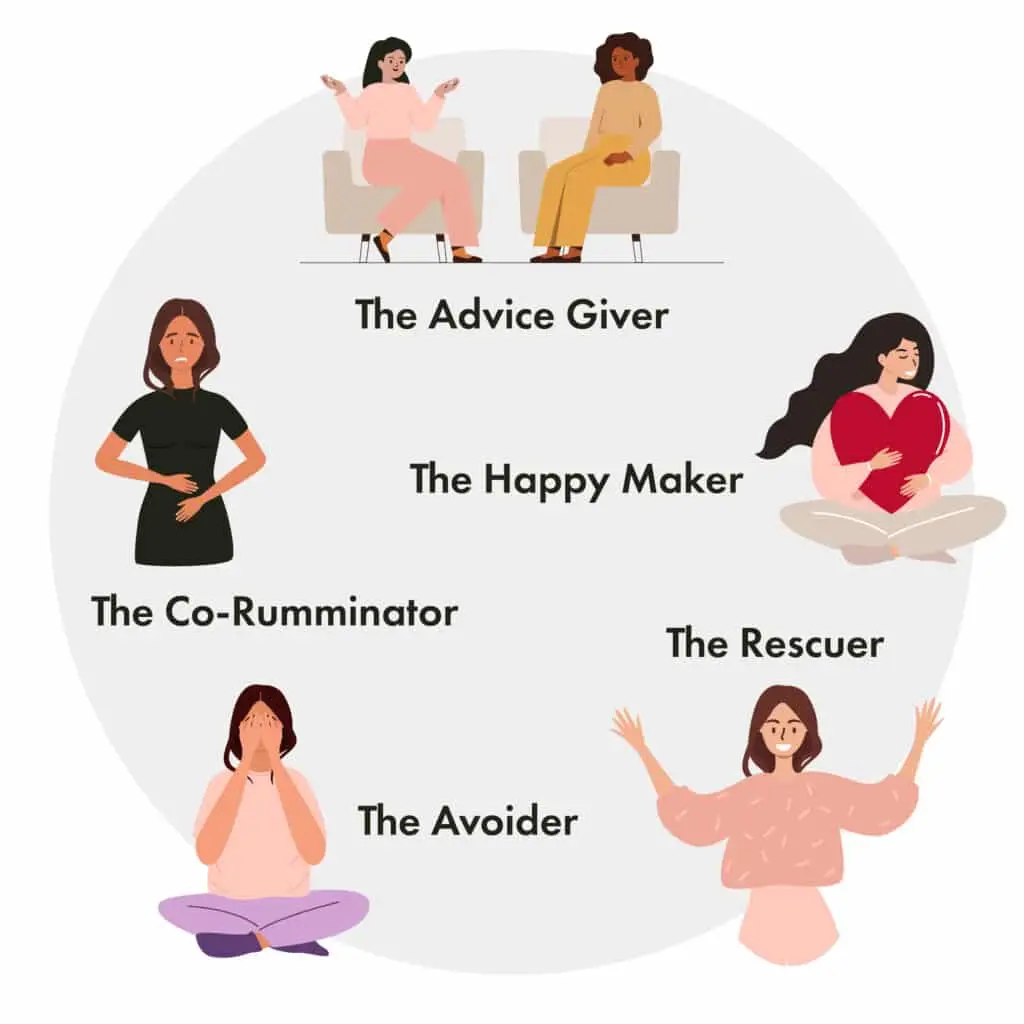
In my work I have identified five common traps, which I have turned into five personas, to help you start to notice how you and others around you show up in conversations.
- The advice-giver really wants to help. As soon as you have started to share your problem their mind is already working on solutions that they will be itching to share with you, like a child in the classroom wriggling while sitting on their hands, desperate to say, “I know this one!”.
- The avoider is all about diverting the conversation away from the emotion. It may be that they feel uncomfortable and don’t want to say the wrong thing, or they feel as if they don’t have the time or the capacity to cope with what comes up. Their aim could also be to help us by distracting us from the thing that is causing us pain.
- The rescuer actively tries to take our problems away. Like so many of us, they love to ‘fix’ and to be useful. Before we have finished telling them what’s wrong, they are already messaging someone who can help or mentally clearing their diary so they can take on the task themselves.
- The Happy Maker wants to make us feel good again. If they can find a positive, then they can ‘turn that frown upside-down!’ It may be that this is a strategy that has worked for them in the past or they feel a deep responsibility to make the people around them happy.
- The co-ruminator is very common and a very human response. When they say “me too, let me tell you how bad things are for me too”, they are trying to connect, to show you that you are not alone, to show how we are all the same.
Why are they a problem?
Slipping into one of these incredibly human conversational personas is very normal and mostly comes from a place of good intention. However, take a moment to think about how it has felt for you in the past when you have shared that you are struggling and the response you have had has been in line with one of these personas. You might have been left feeling unheard, closed down or maybe, if you were given advice or ‘rescued’, as if you had failed because you were unable to work it out for yourself.
What can I do about these traps?
The first thing we can do is to notice which of these ‘traps’ we tend to fall into most and then practice noticing when we do it, without judgement. Over time, the aim is that we are able to catch ourselves and make a choice to intentionally respond in a different way.
Download my latest eBook to find out more about these personas, their impact and for a list of helpful reflective questions to help you to think about which of these habits/traps you have a tendency to fall into.